For a long time, businesses focused mainly on Google when they wanted people to discover their websites, products or services. Ranking on the first page of search results was considered one of the biggest goals of digital marketing.
But the way people search for information has changed.
Today, someone looking for a digital marketing agency might start with a Google search, watch a YouTube video, check Instagram profiles, read discussions on Reddit or even ask ChatGPT for recommendations. People no longer depend on one platform to find what they need.
This change has created a growing need for businesses to build their presence across multiple online platforms. This approach is commonly referred to as Search Everywhere Optimisation.
In this guide, we’ll explore what Search Everywhere Optimisation means, why it matters and how businesses can use it to improve their online visibility.
What Is Search Everywhere Optimisation?
Search Everywhere Optimisation is an approach to improving a brand’s visibility across different platforms where people search, discover information, compare options and make decisions.
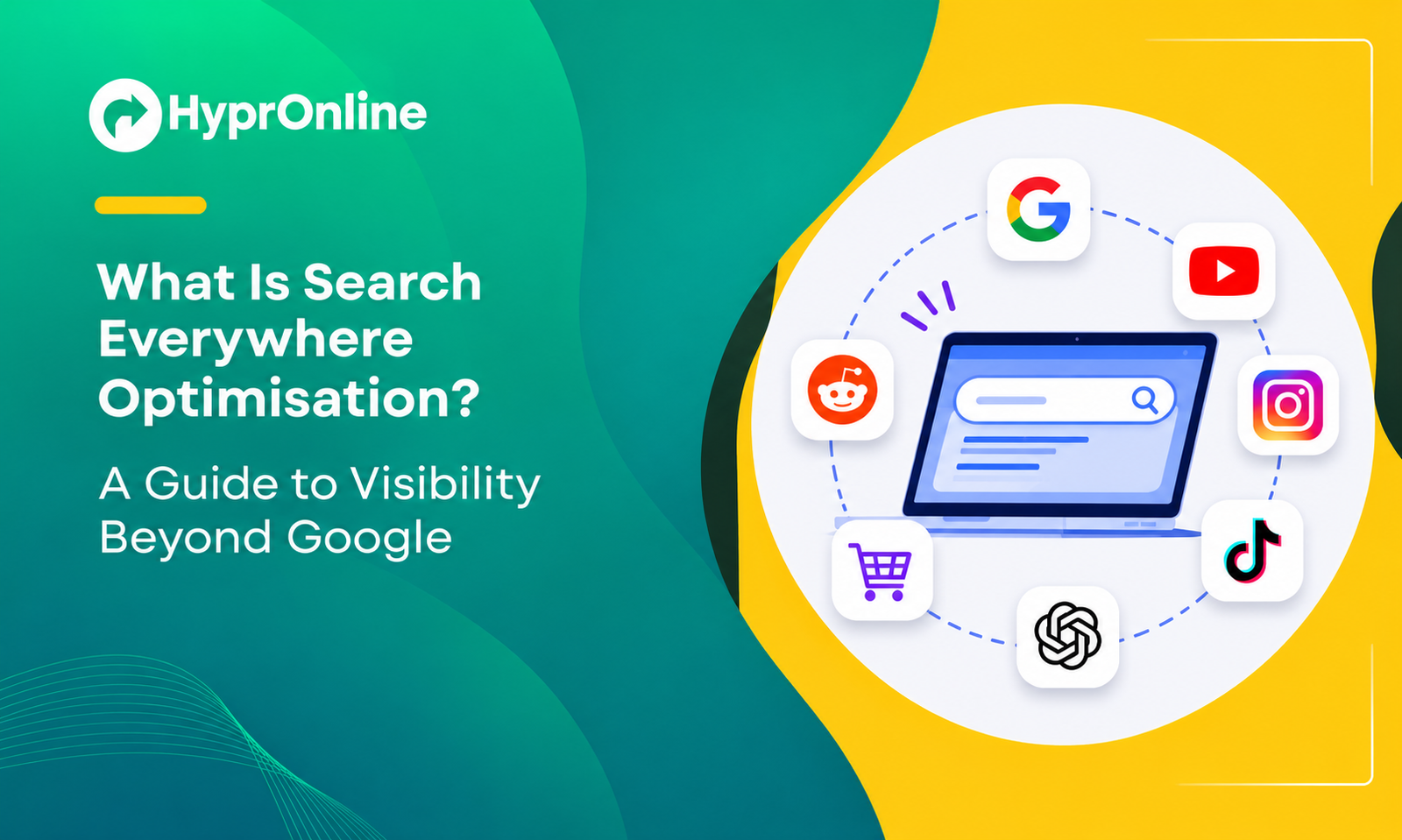
Instead of focusing only on Google rankings, businesses make their content and brand information easier to discover across platforms such as:
- Google and other search engines
- YouTube
- Instagram and TikTok
- Reddit and online communities
- E-commerce marketplaces
- AI-powered platforms such as ChatGPT
The idea is simple: your potential customers may be searching for your business in more than one place, so your brand should be discoverable wherever relevant searches happen.
For example, imagine someone wants to find a reliable skincare clinic. They might search Google for nearby clinics, visit Instagram to see treatment-related content, watch videos explaining different procedures and read customer discussions before making a decision.
If a clinic is visible across these relevant platforms, it has more opportunities to reach that person.
Why Is Search Everywhere Optimisation Becoming Important?
People have different ways of finding information. Some prefer reading articles, while others watch videos, explore social media or ask questions on AI platforms.
This means that having a well-optimised website is important, but it may not cover every way potential customers discover brands.
Here are some reasons why businesses should pay attention to Search Everywhere Optimisation.
1. People Search Across Multiple Platforms
Not every search begins on Google. People may use YouTube to understand a topic, Instagram to discover brands or Reddit to read other people’s experiences.
A business that focuses on only one platform may miss opportunities to connect with audiences elsewhere.
2. Customers Research Before Making Decisions
Customers often compare different businesses before choosing one. They may check websites, social media profiles, reviews, videos and online discussions.
Having useful and consistent information across these platforms can help customers understand your brand better.
3. AI Is Changing How People Discover Information
AI-powered platforms are becoming another way for people to ask questions and explore products, services and businesses.
Instead of searching with a few keywords, users can ask detailed questions and receive conversational answers.
This makes clear, helpful and well-structured content increasingly valuable for brands that want to improve their visibility in AI-powered search experiences.
4. Brand Visibility Is Not Limited to Website Traffic
A person might discover your brand through a YouTube video or social media post and visit your website days later.
Not every discovery leads to an immediate website visit. Building visibility across different platforms helps create more opportunities for people to become familiar with your business.
Where Should Businesses Focus Their Search Everywhere Strategy?
Businesses do not need to be active on every platform. The right approach is to understand where their target audience spends time and which platforms are relevant to their products or services.
Let’s look at some important discovery platforms.
1. Google and Other Search Engines
Search engines remain important for people looking for information, local services, products and solutions.
Businesses can improve their search visibility by:
- Publishing helpful and relevant website content.
- Using keywords that match what their audience searches for.
- Optimising page titles, meta descriptions and headings.
- Improving website speed and mobile experience.
- Building relevant internal links.
- Maintaining an accurate Google Business Profile for eligible local businesses.
For example, a digital marketing agency in Gurgaon can create useful content around SEO, social media marketing and online advertising while also optimising relevant service pages for local searches.
2. YouTube
YouTube is more than an entertainment platform. People regularly use it to learn new skills, understand products and find solutions to everyday problems.
Businesses can improve their YouTube visibility by:
- Creating useful videos that answer common questions.
- Writing descriptive video titles and descriptions.
- Using relevant keywords naturally.
- Adding accurate captions and transcripts.
- Organising videos into relevant playlists.
- Creating videos that explain products, services or processes.
For example, a web development company could publish a video explaining how a website is built or what businesses should consider before redesigning their website.
3. Instagram and TikTok
Social media platforms are important discovery channels, particularly for visual products, services, creators and lifestyle-related businesses.
People often discover new brands through short videos, posts, recommendations and creator content.
Businesses can improve their visibility by:
- Publishing useful and engaging content consistently.
- Using relevant keywords in captions and descriptions.
- Adding clear information to their profiles.
- Creating short videos around customer questions.
- Using relevant hashtags where appropriate.
- Collaborating with suitable creators and industry experts.
For example, a skincare brand can share product information, skincare routines and educational videos to help people discover its products.
The focus should be on creating content that people actually find useful, rather than simply posting frequently.
4. Reddit and Online Communities
People often visit online communities when they want honest opinions, recommendations or practical experiences.
Reddit and other discussion platforms allow users to exchange information and discuss different products, services and problems.
Businesses can approach these platforms by:
- Understanding the questions people ask in relevant communities.
- Learning about common customer concerns.
- Sharing genuinely useful information where community rules allow it.
- Avoiding promotional comments and spam.
- Using discussions to understand customer expectations.
For example, a business offering website development services can learn what website owners struggle with by observing relevant discussions.
The aim should be to contribute value, not to turn every conversation into an advertisement.
5. E-commerce Marketplaces
For businesses selling products online, marketplaces can be important places where customers discover and compare products.
Platforms such as Amazon and other relevant marketplaces have their own search and product discovery systems.
Businesses should focus on:
- Writing clear and descriptive product titles.
- Providing accurate product descriptions.
- Using high-quality product images.
- Adding relevant product details and specifications.
- Maintaining accurate inventory and pricing information.
- Encouraging genuine customer reviews in line with platform policies.
A well-presented product listing makes it easier for shoppers to understand what they are considering.
6. AI-Powered Search Platforms
People are increasingly using conversational AI tools to ask questions, explore ideas and research products or services.
Platforms such as ChatGPT can provide responses based on available information and their search or retrieval capabilities.
Businesses can prepare their online content for AI discovery by:
- Publishing accurate and helpful information.
- Answering common questions directly.
- Creating well-organised service and product pages.
- Maintaining consistent business information.
- Demonstrating expertise through useful content.
- Using appropriate structured data.
- Building a credible online presence through relevant sources and mentions.
It is important to understand that these practices do not guarantee that an AI platform will mention or recommend a particular business. They help make information clearer and easier to understand.
How to Build a Search Everywhere Optimisation Strategy
A good strategy does not mean creating separate content for every platform without a clear direction. It means using your existing knowledge and content in ways that suit different audience behaviours.
Here are some practical steps businesses can follow.
Step 1: Understand Your Target Audience
Start by understanding who your customers are and what they want to know.
Think about the questions they ask before purchasing a product or hiring a service.
For example, someone looking for an SEO agency may search for:
- What does an SEO agency do?
- How much does SEO cost?
- How long does SEO take?
- How can I improve my website’s Google rankings?
These questions can become the foundation of your content strategy.
Step 2: Identify the Right Platforms
You do not need to maintain an active presence everywhere.
Choose platforms based on your business type and audience.
For example:
- A B2B company may benefit from Google, LinkedIn and YouTube.
- A fashion brand may focus on Instagram, TikTok and e-commerce marketplaces.
- A local service business may prioritise Google Search, Google Business Profile and relevant social media platforms.
Focus on platforms where your potential customers are most likely to discover and research your business.
Step 3: Create Content That Answers Real Questions
Content should provide useful information rather than simply promote your business.
You can create:
- Informational blogs.
- How-to guides.
- Short educational videos.
- Frequently asked questions.
- Product demonstrations.
- Customer case studies.
- Social media posts.
- Comparison articles.
One useful blog can also become the foundation for several smaller content pieces.
For example, a blog about website SEO can be repurposed into short social media posts, a YouTube video and a series of frequently asked questions.
Step 4: Optimise Content for Each Platform
Avoid publishing exactly the same content everywhere without making adjustments.
Each platform has a different format and audience behaviour.
A detailed blog may work well on your website, while a short video may communicate the same idea more effectively on Instagram or YouTube.
Keep the core information consistent, but adapt the presentation to the platform.
Step 5: Maintain Consistent Brand Information
Your business name, services, website, contact details and brand descriptions should be accurate and consistent across relevant platforms.
This helps customers understand who you are and what your business offers.
Regularly review your website, business profiles and social media pages to ensure the information is up to date.
Step 6: Monitor Performance Across Platforms
Do not measure success only through website rankings.
Track different indicators depending on the platform and your business goals.
For example:
- Google Search Console: Search impressions, clicks, rankings and search queries.
- Google Analytics 4: Website traffic, engagement and conversions.
- YouTube Analytics: Views, watch time and audience engagement.
- Social media insights: Reach, engagement, profile visits and link clicks.
- Business profiles: Calls, website clicks and other available interactions.
- Lead tracking: Enquiries, qualified leads and conversions.
Reviewing these metrics helps you understand which platforms and content formats are contributing to your marketing goals.
What Is the Difference Between SEO, AEO, GEO and Search Everywhere Optimisation?
These terms are connected, but they do not mean exactly the same thing.
| Approach | Main focus |
|---|---|
| SEO (Search Engine Optimisation) | Improving visibility in search engine results. |
| AEO (Answer Engine Optimisation) | Making content useful and accessible for direct answers and answer-based search experiences. |
| GEO (Generative Engine Optimisation) | Improving the chances of brand and content visibility in generative AI responses. |
| Search Everywhere Optimisation | Building visibility across multiple search and discovery platforms. |
Think of Search Everywhere Optimisation as a broader approach that brings different optimisation activities together.
For example, a business may use SEO for Google visibility, AEO for direct answers, GEO for AI discovery and social media optimisation for discovery on social platforms.
Together, these activities can help a brand build a stronger online presence.
Common Search Everywhere Optimisation Mistakes to Avoid
While expanding your brand’s presence across platforms, avoid these common mistakes.
1. Trying to Be Everywhere at Once
Managing too many platforms without a clear strategy can reduce content quality. Start with the platforms most relevant to your audience.
2. Publishing the Same Content Everywhere
Different platforms have different audiences and content formats. Adapt your message instead of copying and pasting everything.
3. Focusing Only on Keywords
Keywords matter, but content should also answer real questions and provide useful information.
4. Ignoring Brand Credibility
Inaccurate business information, outdated profiles and poor-quality content can affect how people perceive your brand.
5. Not Measuring Performance
Without tracking results, it becomes difficult to understand which platforms are helping your business achieve its goals.
Final Thoughts
The way people discover businesses is changing, and brands need to understand where their potential customers are searching.
Google remains an important part of online discovery, but it is no longer the only place where people look for information. YouTube, social media, online communities, marketplaces and AI-powered platforms also influence how people explore and compare their options.
Search Everywhere Optimisation is about understanding these different discovery points and building a consistent presence across the platforms that matter to your audience.
Start with the platforms that make the most sense for your business, publish useful content and keep improving your approach based on performance.
Want to improve your brand’s online visibility?
At HyprOnline, we help businesses strengthen their digital presence through SEO, social media marketing, performance marketing, content creation and other digital solutions. Get in touch with our team to explore a strategy that supports your business goals.
Frequently Asked Questions
1. What is Search Everywhere Optimisation?
Search Everywhere Optimisation is the practice of improving a brand’s visibility across multiple platforms where people search for information, products and services, including search engines, social media, marketplaces and AI platforms.
2. Is Search Everywhere Optimisation different from SEO?
Yes. SEO mainly focuses on improving search engine visibility, while Search Everywhere Optimisation takes a broader approach by including multiple search and discovery platforms.
3. Why is Search Everywhere Optimisation important for businesses?
It helps businesses reach potential customers across different platforms, build brand awareness and create more opportunities for people to discover their products or services.
4. Which platforms are important for Search Everywhere Optimisation?
Important platforms may include Google, YouTube, Instagram, TikTok, Reddit, e-commerce marketplaces and AI-powered search platforms. The right choice depends on your target audience.
5. Does Search Everywhere Optimisation help with AI search visibility?
It can support AI search visibility by encouraging businesses to publish accurate, helpful and well-structured information. However, visibility in AI-generated responses is not guaranteed.
6. How can small businesses start with Search Everywhere Optimisation?
Small businesses can begin by optimising their website and Google Business Profile, creating useful content and building a consistent presence on one or two relevant social platforms.
7. Do businesses need to be active on every platform?
No. Businesses should focus on platforms that are relevant to their audience, industry and marketing goals instead of trying to maintain a presence everywhere.
8. How can businesses measure Search Everywhere Optimisation performance?
Businesses can monitor search visibility, website traffic, social media engagement, video performance, profile interactions, brand mentions and enquiries across relevant platforms.